What is Stoicism? A Brief History and How It Can Help in Modern Life
Keywords: Stoicism, history of Stoicism, modern applications, practical philosophy, ancient Greece, mental resilience
7–11 minutes
Introduction: Embracing Stoicism in a Chaotic World
Ever feel like life is spinning out of control? Between work pressures, social media overload, and endless to-do lists, it’s easy to get swept up in the chaos. But what if there was a way to find calm amid the storm? Enter Stoicism—an ancient philosophy that’s surprisingly perfect for modern times.
Stoicism isn’t just some old-school thinking from ancient Greece; it’s a practical guide to developing self-control, resilience, and mental clarity, no matter what’s happening around you. The big idea? While you can’t control everything that happens, you can control how you react. And that’s where true strength lies.
“You have power over your mind – not outside events. Realize this, and you will find strength.” — Marcus Aurelius
Affiliate Link : Meditations: A New Translation : Nearly two thousand years after it was written, Meditations remains profoundly relevant for anyone seeking to lead a meaningful life.
Link to my article on Marcus Aurelius the Philosopher Emperor.
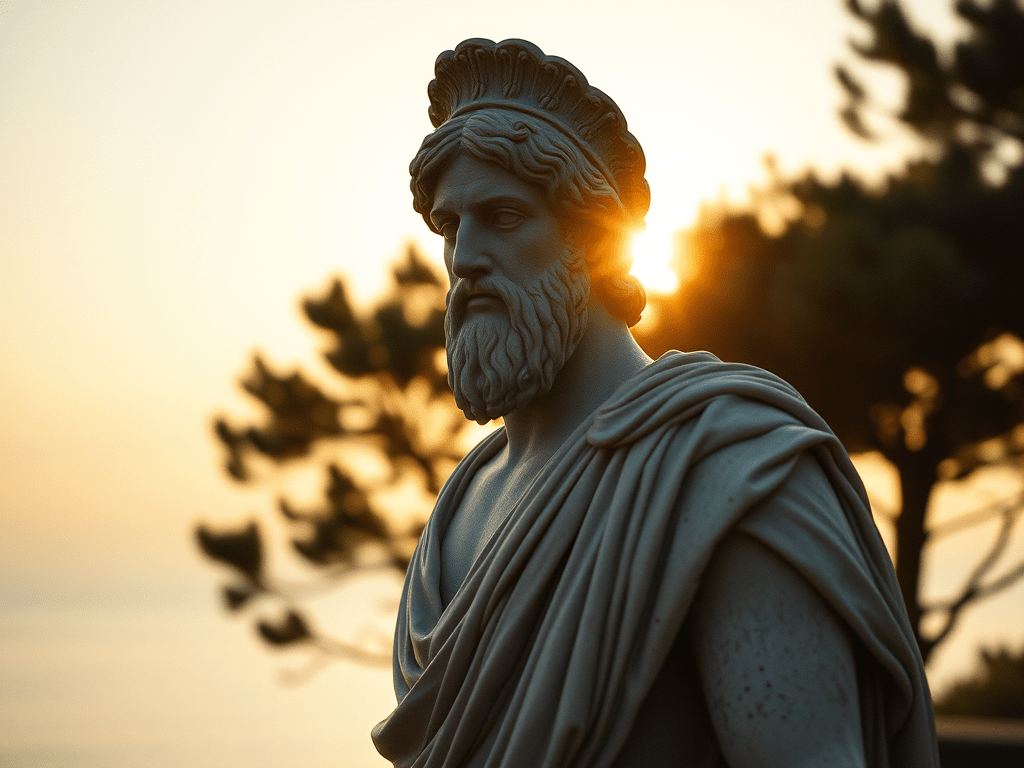
“Statue of Marcus Aurelius, the Stoic philosopher-emperor.”
““You have power over your mind – not outside events. Realize this, and you will find strength.” — Marcus Aurelius
Advertisements
A Brief History of Stoicism
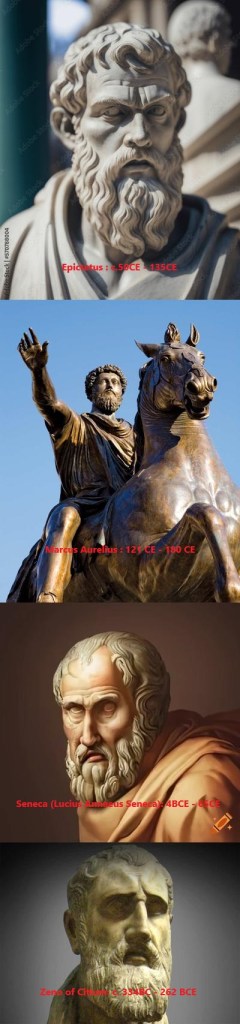
So, where did Stoicism come from? Let’s rewind to around 300 BCE in Athens. A guy named Zeno of Citium started teaching philosophy at a place called the Stoa Poikile—a painted porch. That’s actually how “Stoicism” got its name!
Zeno‘s ideas were all about pursuing wisdom, virtue, and inner peace. Fast forward, and Stoicism spreads to Rome, where it really takes off. Let’s meet some of the key players:
Marcus Aurelius: Not just a Roman Emperor but also a deep thinker. His work Meditations is like a personal diary of Stoic practices, offering insights on how to live a good life despite immense pressures. (Internal Link: Marcus Aurelius: The Philosopher Emperor’s Legacy)
Seneca: A Roman statesman and playwright who wrote extensively on how to apply Stoicism in everyday life. His letters and essays tackle issues like dealing with anger and grief. (Internal Link: Life Lessons from Seneca: Wisdom Amidst Adversity)
Epictetus: Born a slave, he became one of the most influential Stoic teachers. Epictetus taught that while we can’t control external events, we can control our own responses. (Internal Link: The Life and Teachings of Epictetus)
These philosophers weren’t just talking the talk; they were walking the walk. Their teachings have shaped Stoicism into a philosophy that’s incredibly useful even today.
At the heart of Stoicism are principles that can seriously change how we approach life:
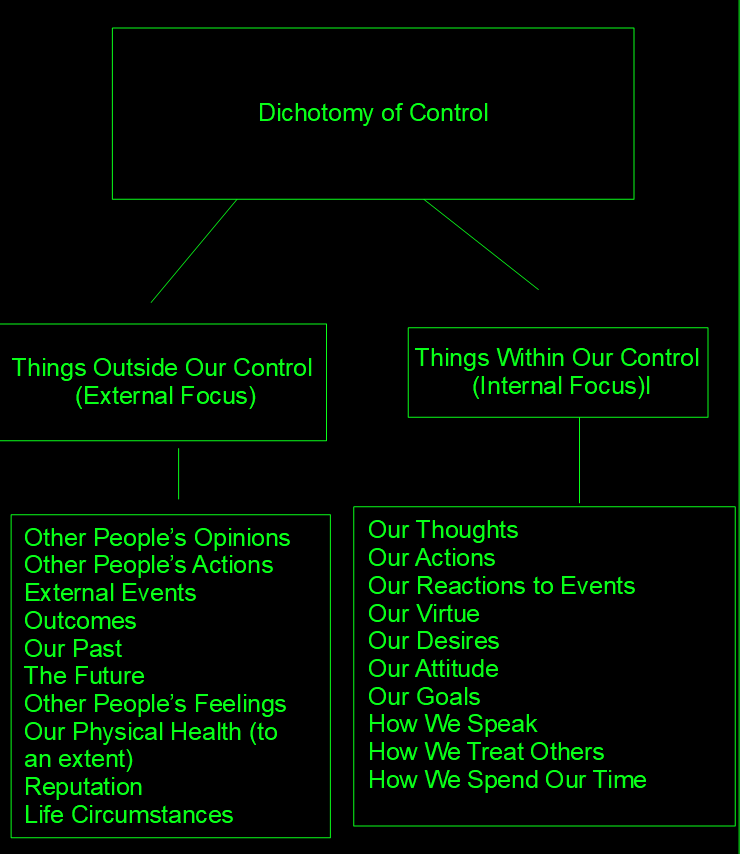
Dichotomy of Control Stoicism teaches that some things are up to us, and others aren’t. We can control our thoughts, actions, and attitudes—but not external events. Example: Your phone dies just as you’re about to snap the perfect sunset pic for Instagram. You can’t control your phone’s battery life (especially when you forgot the portable charger), but you can control whether you let it ruin the moment. Maybe it’s a sign to actually enjoy the sunset without trying to get the perfect hashtag.
Living in Accordance with Nature This means aligning yourself with the natural world and acting with reason and virtue. Example: When the Wi-Fi decides to take a day off during your crucial Zoom meeting, instead of throwing your laptop out the window, you choose to stay calm and maybe even appreciate the unexpected digital detox. Mother Nature is telling you to chill—who are you to argue?
Amor Fati (Love of Fate) Embrace whatever life throws at you—even the tough stuff. Example: You spill coffee on your white shirt right before an important date. Rather than panicking, you roll with it—maybe coffee-stained chic will be the next fashion trend, and you’re just ahead of the curve.
Virtue is the Only Good True value comes from being virtuous, not from external success. Example: You discover a glitch on an online shopping site that lets you snag items for free. Instead of maxing out your cart with designer sneakers, you report the issue—because sleeping well at night beats a closet full of kicks you’ll trip over anyway.
“Diagram illustrating the Stoic dichotomy of control.”
Advertisements
How Stoicism Can Help in Modern Life
Believe it or not, Stoicism is like having a wise mentor whispering sage advice in your ear, helping you navigate the madness of modern living. Here’s how this ancient philosophy can seriously level up your day-to-day life:
Dealing with Anxiety and Stress
Let’s face it: In our hyper-connected world, stress and anxiety have practically become default settings. Between the endless barrage of emails, the tyranny of to-do lists, and the perpetual FOMO fueled by social media, it’s a wonder any of us can find a moment’s peace.
Stoicism steps in like a mental reset button, reminding us to focus on what we can control and let go of the rest. Instead of spiraling into worry about that unread email marked “URGENT” at 10 p.m., Stoicism encourages us to set boundaries and prioritize our well-being.
By shifting our attention to our own actions and attitudes, we reclaim power over our mental state. It’s about turning down the noise and tuning into what truly matters, giving us the headspace to handle challenges with grace rather than panic.
Negative emotions—anger, jealousy, fear—can hijack our minds faster than you can say “mindfulness.” Stoicism teaches that while we can’t always prevent these feelings from popping up (we’re only human, after all), we can control how we respond to them.
Instead of firing off that snarky tweet or indulging in a doom-scrolling session, Stoicism invites us to pause and take a breather. It’s like having an emotional buffer that saves us from reactions we’ll regret later.
By acknowledging our emotions without letting them run the show, we build emotional resilience. Think of it as upgrading your internal software to handle glitches more effectively, ensuring smoother operations even when life sucks.
Building Resilience
Life has a knack for throwing curveballs when we least expect them—job losses, health scares, global pandemics (remember those?). Stoicism equips us with the mental tools to not just survive these challenges but to grow from them.
By accepting that setbacks are an inevitable part of the human experience, we can face them head-on without being blindsided. Stoicism encourages us to view obstacles as stepping stones rather than roadblocks.
Ever find yourself wondering what it’s all about as you stare blankly at yet another spreadsheet? Stoicism nudges us to define our own purpose and align our daily actions with our deepest values. It’s about living intentionally rather than drifting through life on autopilot.
By focusing on what truly matters—be it creativity, community, or personal growth—we can lead more fulfilling lives. This might mean making bold changes, like pivoting careers or launching that side hustle you’ve been daydreaming about during Zoom meetings.
Stoicism doesn’t hand you a pre-packaged purpose but encourages you to discover your own path. It’s an invitation to live authentically and make a meaningful impact, no matter how big or small.
“True happiness is to enjoy the present, without anxious dependence upon the future.” — Seneca
Advertisements
Practical Stoic Exercises for Everyday Life
Ready to sprinkle some Stoic wisdom into your daily grind? Let’s dive into some practical exercises that are easier than pretending you understand the stock market.
Morning Reflection How-To: Before you dive into the whirlwind of emails and memes, spend five minutes thinking about what you can actually control today. You can’t control your boss’s sudden obsession with 7 a.m. meetings or the weather deciding to rain on your freshly styled hair. But you can control your attitude.
Negative Visualization How-To: Imagine potential glitches in your day and how you’d handle them like a pro.Why Bother? Because life is as unpredictable as the algorithm changes on your favorite social media platform. Your favorite café might run out of oat milk, your phone might die right when you need directions, or your online date might show up wearing socks with sandals.By mentally rehearsing these hiccups, you’re less likely to be thrown off when they happen. It’s like having a mental umbrella—useless when it’s sunny, but you’ll thank yourself when it pours.
Evening Journaling How-To: Before you Netflix and chill (literally), take a few minutes to journal down the day’s events, focusing on your reactions. Guidelines:
Wins: What Did I do well today?
Losses: What could I improve on or do better?
Tomorrow’s Intentions: Set goals like finally starting that book you’ve been “reading” for six months or meal-prepping something other than instant noodles.
This isn’t about penning the next great novel; it’s about tuning into your own life so it doesn’t pass by like a montage in a rom-com.
Don’t start your day with work e-mails; have a cup of coffee first and ignore the mess.
Conclusion: Stoicism for the Modern Mind
So there you have it—Stoicism isn’t just dusty old philosophy; it’s a practical guide for navigating today’s world. By focusing on what you can control, embracing life’s curveballs, and living according to your values, you can find a sense of peace and purpose.
Why not give some of these Stoic practices a shot? You might be surprised at how much they can improve your daily life.
Affiliate Link Opportunity: The Beginner’s Guide to Stoicism: Tools for Emotional Resilience and Positivity – Being a stoic means embracing positivity and self-control through the ability to accept the uncertainty of outcomes. With this stoicism guide, the beginner stoic will learn how to take charge of their emotions on the path to sustained happiness and satisfaction.
“Finding beauty in life through Stoic contemplation.”
“Dwell on the beauty of life. Watch the stars, and see yourself running with them.” — Marcus Aurelius
Hello! I’m thrilled that you’ve found your way to my corner of the internet. I’m not a philosopher by profession, nor do I claim to be an expert in Stoicism. Much like Marcus Aurelius, who humbly practiced philosophy while leading an empire, I see myself as a student of life, striving to apply Stoic principles in my everyday journey. Join me on my way to living life The Stoic Way !
[…] from the truth. In this article, we’ll delve deeper into the most common misconceptions about Stoicism, debunk them with logical reasoning, and highlight the wisdom of renowned Stoic philosophers. By […]
[…] Ever wonder who kick-started the Stoic philosophy that’s influenced thinkers for over two millennia? Meet Zeno of Citium, the man who turned personal adversity into a legacy of wisdom that’s still relevant today. Let’s dive into the life and teachings of the founder of Stoicism . […]
[…] subjects like literature, rhetoric, law, and, most importantly, philosophy. He was introduced to Stoicism through his tutor Junius Rusticus, who gifted him a copy of Epictetus’s teachings. This work […]
[…] Stoicism teaches us that what truly causes anxiety is not external events but how we react to them. By applying Stoic principles to our everyday lives, we can cultivate inner calm, manage stress better, and learn to overcome anxiety through a shift in perspective. […]
[…] born in the bustling streets of ancient Athens evolved to guide emperors in the grandeur of Rome? Stoicism, a timeless philosophy, began in Greece with thinkers seeking wisdom on how to live virtuously in […]
[…] Stoicism, founded in Athens by Zeno of Citium in the early 3rd century BCE, is a philosophy that teaches the development of self-control and fortitude as a means to overcome destructive emotions. The Stoics believed that virtue (such as wisdom) is happiness, and judgment should be based on behavior, not words. By understanding the natural order of the world, they maintained that one could remain calm in the face of life’s ups and downs. […]
[…] Stoicism has been a guiding philosophy that offers timeless wisdom applicable even today. Its teachings have helped me navigate life’s challenges, cultivate resilience, and find inner peace. In this post, I will share five Stoic quotes that have profoundly impacted my life, along with practical examples of how they can be applied in modern times. While these are my personal favorites, there are many other Stoic insights worth exploring. […]
[…] a world often dominated by the pursuit of wealth and status, the ancient wisdom of Stoicism offers a refreshing perspective on what truly matters. While philosophers like Seneca, Epictetus, […]
[…] Stoicism teaches that while we can’t dictate external events, we have full command over our actions and attitudes. Worrying about the inevitable doesn’t change outcomes, but taking deliberate steps within our control does. […]
[…] wondered if a few simple habits could bring you greater peace, resilience, and clarity? Stoic philosophy isn’t just ancient wisdom reserved for scholars—it’s a practical guide for everyday living. The Stoics believed that real strength comes […]
[…] Stoicism, a philosophy that was founded over 2,000 years ago by Zeno of Citium in ancient Greece, offers timeless insights into human nature and relationships. By focusing on what we can control—our thoughts and actions—and fostering mutual growth, we can transform our relationships and find true fulfillment. […]
[…] an ancient philosophy that can help us find our footing amidst all this chaos. It’s called Stoicism , and it’s not just for old Greek guys in togas. It’s a practical guide to living well, […]
Stoicism is practical philosophy—so the best way to learn is through daily practice. Subscribe for free and get short, easy-to-follow Stoic quotes and daily challenges (which I also personally do!). Let's practice and grow together!




 The Stoic Way - Timeless wisdom for Modern resilience
Leave a reply to Harnessing Stoicism to Strengthen Modern Relationships – The Stoic Way – Timeless wisdom for Modern resilience Cancel reply