
Introduction
Ever wondered if a few simple habits could bring you greater peace, resilience, and clarity? Stoic philosophy isn’t just ancient wisdom reserved for scholars—it’s a practical guide for everyday living. The Stoics believed that real strength comes not from controlling the world around us but from mastering ourselves and our reactions. In this article, we’ll dive into five Stoic habits you can start implementing right now. They’re straightforward yet powerful practices that pave the way to inner peace, personal growth, and a better tomorrow.
So, let’s get started and explore how Stoic wisdom can enrich your daily life.
Habit 1: Evening Reflection—A Time for Growth
“When the light has gone out and my household is at rest, I examine my entire day and go back over what I’ve done and said.” – Seneca
Why It Matters
Taking time for evening reflection brings awareness to your actions, words, and thoughts throughout the day. It’s a moment to celebrate small victories, acknowledge areas where you stumbled, and practice self-compassion. Reflecting helps you learn from each experience, building a habit of self-awareness that fosters continuous personal growth.
How to Implement
- Practical Example: Set aside 5–10 minutes each night to review your day. If writing isn’t feasible for you, simply sit quietly and mentally walk through the events.
- Guide: Reflect on these questions:
- What did I do well today? Recognize your achievements, no matter how small.
- Where could I have improved? Identify moments where you could have acted differently.
- What am I grateful for in my life? Cultivate gratitude to foster a positive mindset.
- Extra Tip: Combine this reflection with deep breathing or gentle stretching to create a calming nighttime ritual that prepares you for restful sleep.
- Personal Anecdote: As someone who’s struggled with self-esteem, incorporating positive reflections has been a game-changer for me. Focusing on what I did well each day has significantly boosted my confidence and overall happiness.
Stoic Wisdom
The Stoics valued the practice of self-examination. Seneca would review his day each evening to evaluate his actions and thoughts, aiming to improve continually. By adopting this habit, you’re engaging in a time-tested practice that promotes self-improvement and emotional well-being.
Habit 2: Practice Gratitude and Embrace Amor Fati
“A blazing fire makes flame and brightness out of everything that is thrown into it.” – Marcus Aurelius
Why It Matters
Amor fati, or “love of fate,” encourages us to embrace every experience—good or bad—as essential to our journey. Practicing gratitude helps us find value in what we have, leading to greater resilience and contentment. Scientifically, gratitude has been shown to reduce stress and enhance overall well-being.
How to Implement
Morning Reflection: Starting the Day with Gratitude
- Practical Example: Begin each morning by listing three things you’re grateful for, including challenges that offer growth opportunities.
- Guide: Keep a gratitude journal or use an app to make this a daily habit. Set a reminder each morning to ensure consistency.
- Extra Tip: As you anticipate the day ahead, consider potential challenges you might face and how you can embrace them positively.
- Personal Anecdote: Incorporating morning gratitude has shifted my entire outlook. Embracing amor fati helps me start the day with a positive mindset, ready to turn obstacles into opportunities.
Stoic Wisdom
Marcus Aurelius believed in turning obstacles into opportunities—a form of gratitude that transcends the ordinary. By embracing amor fati, you cultivate a steady sense of peace, seeing all life’s events as beneficial in the long run.
Affiliate Link Opportunity
- Guided Gratitude Journal – All positive changes begin in the mind – and with the Realizations Self-Mastery Journal for Men & Women, you can live life to the fullest potential, Use this Five minute journal one page at a time.
- The Daily Stoic Journal: 366 Days of Writing and Reflection on the Art of Living For anyone seeking inner peace, clarity, and effectiveness in our crazy world, this book will help them immensely for the next year—and for the rest of their lives
Habit 3: Embrace Voluntary Discomfort
“Set aside a certain number of days, during which you shall be content with the scantiest and cheapest fare… and ask yourself, ‘Is this the condition that I feared?’” – Seneca
Why It Matters
Choosing to experience voluntary discomfort, like cold showers, builds resilience and reduces the fear of hardship. Interestingly, cold exposure has been scientifically shown to improve mood and alleviate anxiety by increasing endorphins and boosting norepinephrine levels. Facing discomfort head-on makes you stronger and better prepared for life’s unexpected challenges.
How to Implement
- Practical Example: Incorporate a 30-second cold shower into your routine a few times a week, gradually increasing the duration as you become more comfortable.
- Guide: Start with warm water, then slowly reduce the temperature. Focus on your breathing, embrace the sensation, and remember that it’s temporary and beneficial.
- Personal Anecdote: As someone diagnosed with Generalized Anxiety Disorder (GAD), I’ve found cold showers remarkably helpful. They not only boost my mood but also provide a sense of accomplishment that carries into the rest of my day.
- Scientific Support: Research published in the Journal of Medical Hypotheses suggests that cold showers can stimulate the sympathetic nervous system and increase the release of endorphins, helping reduce symptoms of anxiety and depression.
Stoic Wisdom
Seneca wasn’t just a philosopher in theory; he actively practiced what he preached about embracing hardship. He would start his days with invigorating cold swims in the Tiber River, shocking his body awake and building resilience against discomfort. More notably, Seneca regularly lived as the poorest in Rome did—dressing in shabby clothes, eating meager meals, and sleeping on hard surfaces. This wasn’t out of necessity but a deliberate exercise to remind himself that happiness isn’t tied to luxury.
Habit 4: Pause Before Reacting—Mindful Response
“We have two ears and one mouth so that we can listen twice as much as we speak.” – Epictetus
Why It Matters
Taking a moment to pause before reacting allows you to act according to your principles rather than on impulse. This habit is the cornerstone of self-control and mindfulness. For those of us with ADHD, this pause is especially valuable—it gives our brains a chance to calm down before responding. It’s been immensely helpful in preventing overreactions and maintaining better relationships.
How to Implement
- Practical Example: When you feel a strong emotion, such as anger or frustration, pause. Take three deep breaths and assess the situation before responding.
- Guide: Use physical reminders like a bracelet or set alarms on your phone to prompt you to pause throughout the day.
- Personal Anecdote: Dealing with ADHD, I’ve found that taking a moment to pause has been incredibly helpful. It allows my mind to settle, making it easier to choose a response that aligns with my true intentions.
Affiliate Link Opportunity
- Master Your Emotions: A Practical Guide to Overcome Negativity and Better Manage Your Feelings (Mastery Series) Understanding how negative feelings and emotions work is the first step. Then we must learn how to reprogram those emotions and turn them around. A happier life is possible if you follow the steps.

Stoic Wisdom
Epictetus emphasized that while we can’t control external events, we have full control over our reactions. By practicing this pause, you gain mastery over your mind, enabling you to navigate life’s challenges with composure.
Habit 5: Focus on What You Can Control—The Dichotomy of Control
“You have power over your mind—not outside events. Realize this, and you will find strength.” – Marcus Aurelius
Why It Matters
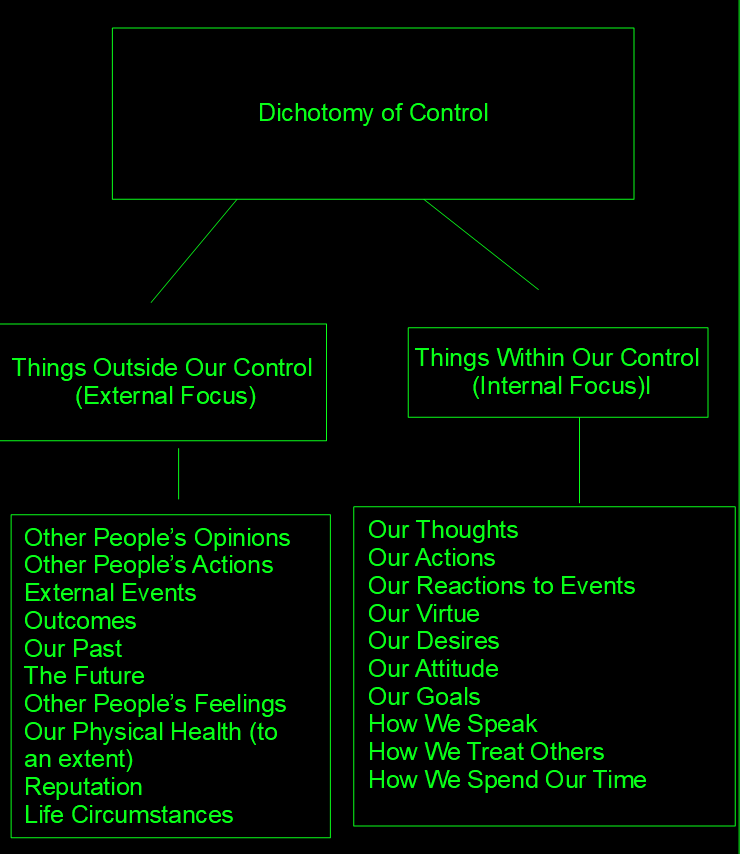
Understanding the dichotomy of control is central to Stoic philosophy. By focusing on what you can control—your own thoughts, attitudes, and actions—and letting go of what you can’t, you reduce anxiety and frustration. This shift in focus cultivates inner peace and empowers you to handle life’s challenges more effectively.
How to Implement
- Practical Example: Throughout the day, when stress or frustration arises, ask yourself, “Is this within my control?” If not, make a conscious effort to let it go.
- Guide: Keep a visual reminder handy. It could be a sticky note on your desk or an image illustrating the dichotomy of control.
- Extra Tip: Make a list of your worries, then categorize them into things you can control and things you can’t. Focus your energy on actionable items.
Stoic Wisdom
Marcus Aurelius regularly reminded himself that he could only control his own mind and actions. Embracing this habit frees you to concentrate on what truly matters, unburdened by external circumstances beyond your influence.
Conclusion
These five habits offer a practical blueprint for living a Stoic life—grounded in resilience, mindfulness, and inner peace. Small changes like evening reflections and practicing gratitude can profoundly transform your mindset. Stoic wisdom isn’t just ancient philosophy; it’s a timeless guide for creating a purposeful, balanced, and strong life.
Why not start today? Each of these habits brings you one step closer to becoming the best version of yourself. Embrace them, and watch how they pave the way for a better tomorrow.
Join the Conversation
Embracing Stoic habits is a journey that becomes even more rewarding when shared with others. We’d love to hear from you!
- Share Your Experiences: Have you started incorporating any of these Stoic habits into your daily life? What changes have you noticed? Your personal stories can inspire and guide others who are on the same path.
- Discuss and Reflect: Feel free to share your thoughts, challenges, or questions about practicing Stoicism. Is there a particular habit you find difficult? Let’s open a dialogue to support each other in overcoming obstacles.
- Offer Insights: Do you have additional tips or strategies that have helped you embrace Stoic principles? Sharing your insights can provide valuable perspectives for our community.
By engaging with one another, we can build a supportive environment where everyone benefits from shared wisdom and encouragement. Together, let’s continue striving toward a life of purpose, balance, and inner peace.


 The Stoic Way - Timeless wisdom for Modern resilience
Leave a comment