
Keywords: Seneca, life lessons, Stoic wisdom, overcoming adversity, Stoicism, ancient Rome, practical philosophy
Meet Lucius Annaeus Seneca, better known as Seneca the Younger—a man who navigated the wild world of ancient Rome with wisdom that’s still spot-on today. His life was a rollercoaster of political drama, personal challenges, and philosophical insights that continue to inspire us today.
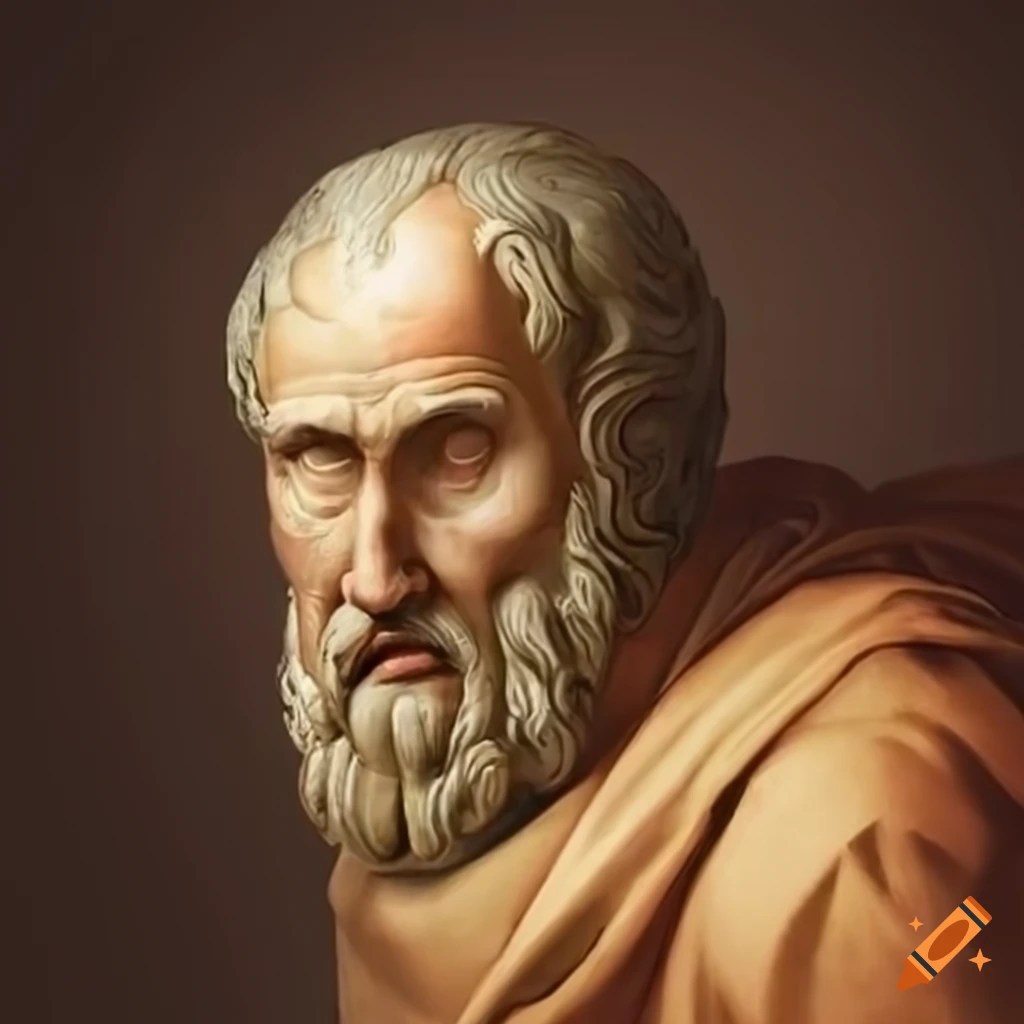
Early Life and Education
Born around 4 BCE in Corduba (modern-day Córdoba, Spain), Seneca was the middle child in a family that valued education above all else. His father, Seneca the Elder, was a renowned rhetorician, so intellectual pursuits were kind of the family business.
At a young age, Seneca was sent to Rome to get the best education money could buy. He studied under Stoic philosophers like Attalus and Sotion, diving deep into teachings about ethics, logic, and how to live a virtuous life. He also explored Pythagorean philosophy, which sparked his interest in science and the natural world.
A Curious Mind
Seneca wasn’t just a bookworm; he was genuinely curious about everything. He once said, “There is no easy way from the earth to the stars,” highlighting his belief in hard work and continual learning. This diverse education laid the groundwork for his writings that blend philosophy with practical life advice.
Health Struggles and Spiritual Growth
Life threw some serious challenges at Seneca. He battled chronic health issues, especially respiratory problems—some think it might have been tuberculosis. But instead of letting illness get him down, he used it as fuel for spiritual and philosophical growth.
Reflecting on mortality and the fleeting nature of life, he wrote, “We are always complaining that our days are few, and acting as though there would be no end of them.” His health struggles deepened his appreciation for each moment and reinforced his Stoic beliefs about inner resilience.
Turning Adversity into Advantage
Seneca believed that challenges were opportunities in disguise. “Difficulties strengthen the mind, as labor does the body,” he observed. His perspective teaches us that adversity can be a powerful teacher if we’re open to learning.
Rise in Roman Politics
Armed with wisdom and eloquence, Seneca stepped into Rome’s political scene—a place as cutthroat as it gets. He became a senator and quickly gained popularity. So much so that Emperor Caligula reportedly considered having him executed out of jealousy but decided against it because Seneca’s health was so poor he seemed unlikely to survive long anyway!
But in 41 CE, drama struck when he was accused of having an affair with Julia Livilla, the sister of Emperor Caligula and niece of Emperor Claudius. Whether it was a setup or a scandal, the result was exile to the island of Corsica.

Making the Best of Exile
Most people would see exile as the end, but not Seneca. He used this time to write and reflect, producing works like “Consolation to Helvia,” a heartfelt letter to his mother assuring her he was coping just fine. He wrote, “A wise man content with his lot is never a fugitive,” emphasizing that true contentment comes from within.
Return from Exile and Tutorship of Nero
After eight years on Corsica, Seneca’s fortunes changed. Agrippina the Younger, the ambitious wife of Emperor Claudius, arranged his return to Rome to tutor her son, Nero. Imagine going from exile to being the mentor of the future emperor!
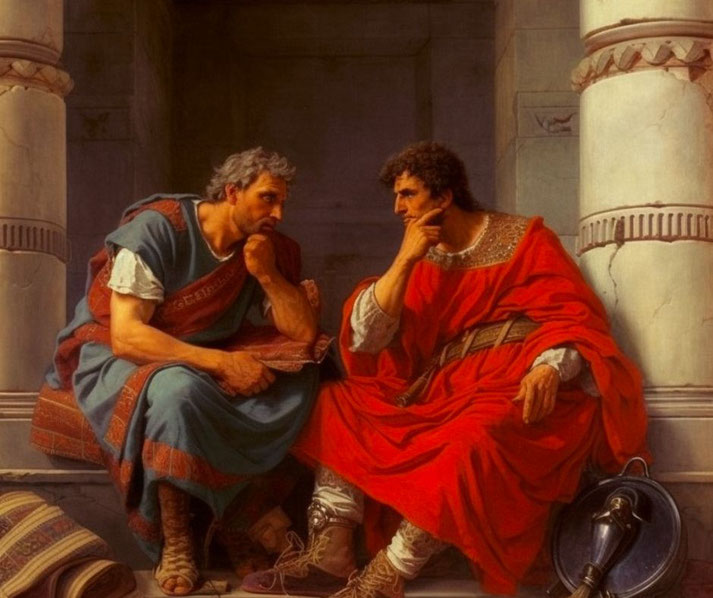
Guiding the Future Emperor
When Nero became emperor at 17, Seneca became one of his closest advisors. At first, things looked promising. Seneca wrote Nero’s speeches and tried to instill Stoic principles of wisdom and mercy. He believed in leading by example, advising, “Long is the road to learning by precepts, but short and successful by examples.”
But as time went on, Nero’s darker tendencies emerged. Despite Seneca’s efforts, he couldn’t keep Nero from descending into tyranny. It’s a classic case of the student not following the teacher’s lessons.
Philosophical Works and Core Teachings
Seneca was a prolific writer, and his works have stood the test of time. His essays, letters, and tragedies cover topics from ethics to science, all filled with practical advice.
Key Works
- “Letters from a Stoic” (Epistulae Morales ad Lucilium): A collection of 124 letters offering wisdom on how to live a good life. He tells Lucilius, “Begin at once to live, and count each separate day as a separate life.”
- “On the Shortness of Life” (De Brevitate Vitae): An essay reminding us that life isn’t too short; we just waste a lot of it. “It is not that we have a short time to live, but that we waste much of it,” he wrote.
- “On Anger” (De Ira): A deep dive into managing anger, where he notes, “The best cure for anger is delay.”
- “Natural Questions” (Naturales Quaestiones): An exploration of natural phenomena, showcasing his scientific curiosity.
Core Teachings
- The Value of Time Seneca was all about not wasting time. He urged, “Hold every hour in your grasp. Lay hold of today’s task, and you will not need to depend so much upon tomorrow’s.”
- Emotional Resilience He believed our reactions, not events themselves, cause distress. “We suffer more often in imagination than in reality,” he observed.
- Living in Accordance with Nature Seneca taught that harmony comes from understanding and aligning with the natural world. “Live according to nature,” he advised, emphasizing simplicity and virtue.
- Acceptance of Fate Emphasizing the Stoic concept of amor fati (love of fate), he stated, “A good man harmonizes with fate, and his will is one with the divine order.”
- Practice of Virtue (link to my blogpost about Stoic virtues) Virtue was central to Seneca’s philosophy. He wrote, “The reward of a good deed is to have done it.”
Daily Practices and Exercises
Seneca recommended practical exercises to cultivate Stoic virtues(link to my blogpost about Stoic virtues). He suggested starting the day by setting intentions and ending it with self-reflection. “When the light has been taken away and my wife has fallen silent, I examine my entire day and go back over what I’ve done and said,” he shared.

Personal Character and Anecdotes
Seneca was a man of contrasts, making him all the more relatable. He preached Stoicism but was incredibly wealthy, which raised eyebrows even in his time.
The Wealthy Stoic and Living Simply
Despite his riches, Seneca believed that wealth isn’t inherently bad if you’re not attached to it. He explained, “Riches ought to be employed, not adored.”
In fact, he practiced periods of voluntary poverty to build resilience and appreciate what he had. He would live for days or weeks on the most meager food and clothing. He wrote about this practice: “Set aside now and then a number of days during which you will be content with the scantiest and cheapest fare, with coarse and rough dress, saying to yourself: ‘Is this what one used to dread?’”
Compassionate and Generous
Seneca was known for his generosity and kindness. During a famine in Rome, he reportedly opened his granaries to feed the hungry. He believed in acts of kindness, stating, “Wherever there is a human being, there is an opportunity for a kindness.”
Advocate for Humanity
He was ahead of his time in promoting a sense of shared humanity. “I am not born for one corner; the whole world is my native land,” he declared. Seneca’s writings often emphasize the interconnectedness of all people.
Good Things Said About Him
Contemporaries and later historians have praised Seneca’s intellect and moral character. Quintilian, a famous Roman educator, admired his eloquence and depth. Early Christian writers found value in his ethical teachings, with Tertullian referring to him as “our Seneca,” highlighting the similarities between his philosophy and Christian morals.
Final Years and Death
As Nero’s reign grew more brutal, Seneca sensed danger. He attempted to retire and even offered to give up his wealth, but Nero refused.
In 65 CE, Seneca was implicated in the Pisonian Conspiracy to assassinate Nero—a plot many believe he wasn’t actually involved in. Ordered to commit suicide, Seneca met his end with the composure you’d expect from a Stoic philosopher.
He comforted his friends, saying, “What need is there to weep over parts of life? The whole of it calls for tears.” He attempted to bleed out by cutting his veins, but when that proved slow, he consumed poison and finally entered a warm bath to speed up the process. Even in his final moments, he tried to ease the sorrow of those around him.
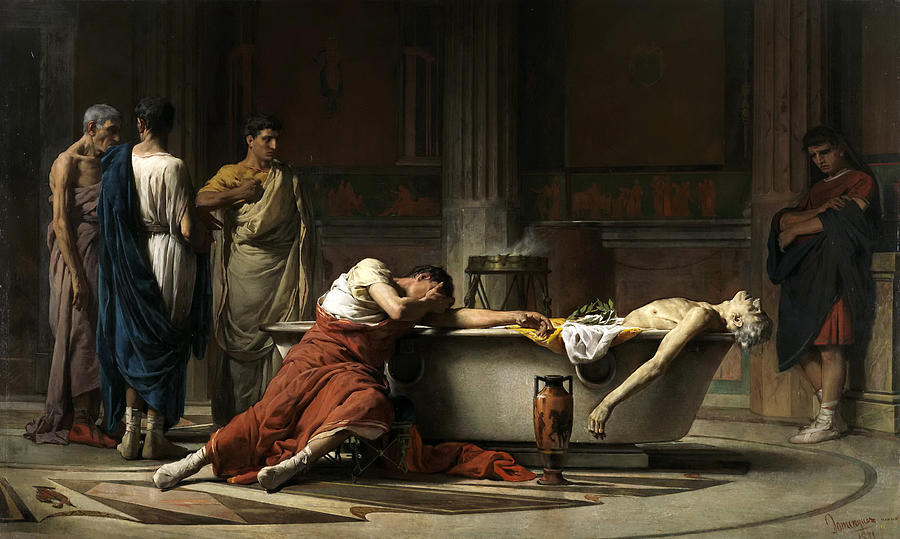
A Stoic Farewell
Seneca’s death became legendary, symbolizing the ultimate Stoic acceptance of fate. He turned his demise into a final lesson on dignity and courage, embodying his belief that “Life, if you know how to use it, is long enough.”
Legacy
Seneca’s writings have transcended time, influencing generations across the globe. His blend of practical advice and deep philosophy makes his work accessible and relevant even today.
Influence on Future Generations
- Early Christian Thought His moral teachings aligned closely with Christian values, so much so that early Church Fathers quoted him extensively. Some even speculated about a correspondence between Seneca and the Apostle Paul.
- Renaissance Humanism Thinkers like Erasmus and Montaigne drew inspiration from Seneca’s emphasis on personal virtue and self-examination.
- Modern Self-Help Movement Many principles in today’s self-improvement books echo Seneca’s ideas. Concepts like mindfulness, living in the present, and cognitive reframing have roots in his work.

Timeless Wisdom
Seneca’s thoughts on dealing with adversity, time management, and ethical living are as applicable now as they were two millennia ago. As he wisely put it, “Life is long if you know how to use it.”

Conclusion
Seneca the Younger was more than a philosopher; he was a man who lived his teachings amidst the whirlwind of Roman politics and personal trials. His life is a testament to the power of resilience, wisdom, and ethical living.
By delving into Seneca’s journey, we’re reminded that while we can’t control everything that happens to us, we can control how we respond. His insights encourage us to reflect on our lives, seize the day, and strive for inner peace amidst external chaos.


 The Stoic Way - Timeless wisdom for Modern resilience
Leave a reply to What is Stoicism? A Brief History and How It Can Help in Modern Life – The Stoic Way Cancel reply