
Discover the life and teachings of Musonius Rufus, the “Roman Socrates” a Stoic philosopher whose practical wisdom offers timeless guidance for modern living.
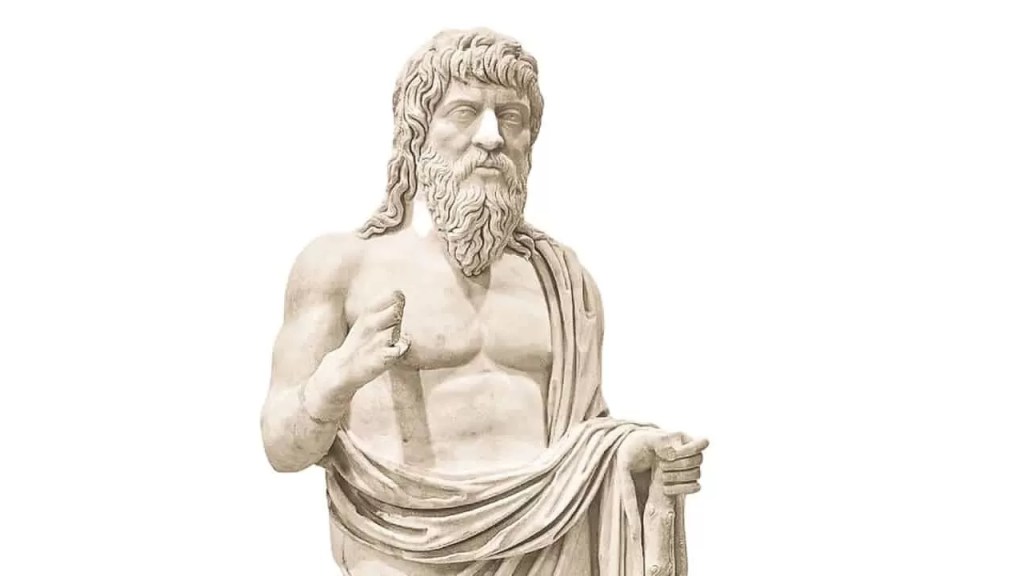
Table of Contents
- Introduction
- The Life of Musonius Rufus
- Core Teachings of Musonius Rufus
- Modern Applications of His Teachings
- Affiliate Recommendations
- Join the Conversation
- Conclusion
Introduction
In a world often dominated by the pursuit of wealth and status, the ancient wisdom of Stoicism offers a refreshing perspective on what truly matters. While philosophers like Seneca, Epictetus, and Marcus Aurelius are well-known torchbearers of Stoic thought, Musonius Rufus stands out as a pivotal yet underappreciated figure whose teachings are profoundly relevant today.
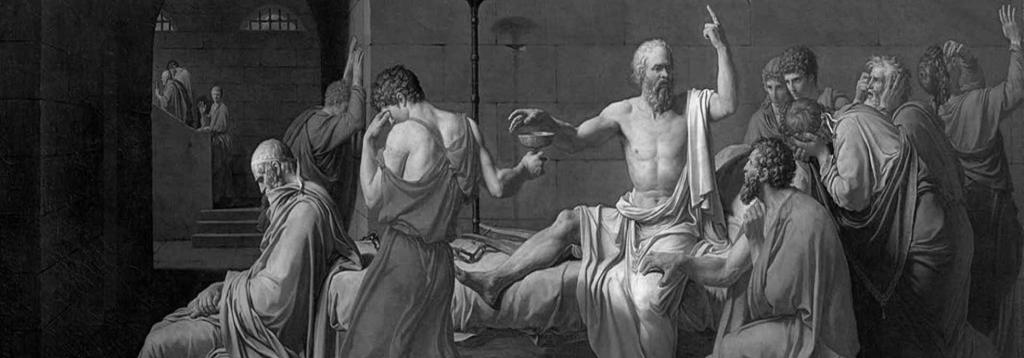
Musonius Rufus, known as the ‘Roman Socrates,’ earned this title due to his method of questioning and unwavering commitment to virtue, much like Socrates. Just as Socrates’ philosophy was mostly recorded by his student Plato, much of what we know about Musonius Rufus comes from his student, Epictetus. In both cases, it is a tragedy that so little of the teachers’ own writings remain, leaving us largely reliant on the interpretations and records of their students. Despite this, Musonius championed a philosophy rooted in practical action, ethical living, and compassion, offering timeless guidance for navigating the complexities of modern life.
Join us as we delve into the life of Musonius Rufus, explore his core teachings, and discover how his wisdom can be applied today.
The Life of Musonius Rufus
Early Life and Background
A Noble Beginning
Musonius Rufus was born around 30 CE in the ancient city of Volsinii (modern-day Bolsena, Italy), nestled in the heart of Etruria. Coming from an Etruscan equestrian family, he was afforded the privileges of nobility, including a comprehensive education in the rich traditions of Roman and Greek philosophy. The cultural milieu of Etruria, known for its artistic and intellectual heritage, profoundly influenced his early development.
Philosophy in Practice
From a young age, Musonius was drawn to philosophy, particularly Stoicism. Unlike philosophers who indulged in abstract theorizing, he believed that philosophy should be practical, guiding not just thoughts but everyday actions. He famously stated:
“Philosophy is nothing else than to search out by reason what is right and proper, and by deeds to put it into practice.”
— Musonius Rufus
His commitment to living his philosophy made him stand out in an era marked by moral decay and political turbulence.
Conflict with Imperial Rome
Challenging the Emperor
Musonius’s unwavering commitment to virtue often put him at odds with the Roman ruling elite, especially during the tyrannical reign of Emperor Nero. He openly criticized the excesses and moral corruption of the time, advocating for a return to traditional virtues.
In 65 CE, he was implicated in the Pisonian Conspiracy, an alleged plot to overthrow Nero. Although there was scant evidence connecting him directly, Nero seized the opportunity to exile one of his most vocal critics. This led to Musonius’s banishment to the desolate island of Gyaros in the Aegean Sea.
Exile and Resilience
Turning Adversity into Opportunity
Gyaros was notorious for its harsh, barren landscape—a place intended to break the spirits of those condemned there. Yet, Musonius saw his exile not as a punishment but as a test of his Stoic principles. He embodied the Stoic ideal of focusing on what is within one’s control.
“No hardship affects a good man or woman; for they live not for pleasure but for virtue.”
— Musonius Rufus
Cultivating the Uncultivable
Remarkably, Musonius discovered a source of fresh water on the arid island and began cultivating the land alongside fellow exiles and students. This act was symbolic of his ability to bring life and purpose to the most desolate situations. His efforts turned Gyaros into an unlikely center of Stoic learning.
Compassion in Adversity
Musonius shared his meager resources, often going without to ensure others had enough. A famous anecdote recounts how he comforted a fellow exile who had lost all hope. Spending hours discussing the transient nature of suffering and the enduring importance of virtue, Musonius helped the man find strength in adversity.
“In our adversity, we find the strength of our character. Despair not, for every challenge is an opportunity to practice virtue.”
— Musonius Rufus
Key Takeaway: Musonius’s actions on Gyaros demonstrated that true virtue shines brightest in the face of hardship.
Compassionate Mentor and Teacher
Guiding Epictetus
Perhaps Musonius’s most enduring legacy is his mentorship of Epictetus, who began life as a slave. Epictetus attended Musonius’s lectures while still in servitude. Recognizing his potential, Musonius encouraged him to pursue philosophy despite societal constraints.
“I cannot escape my circumstances, but I can choose how I respond to them. Musonius Rufus taught me that true freedom lies within.”
— Epictetus
Their relationship exemplifies the transformative power of education and mentorship, transcending social barriers.
Advocating for Equality
Musonius was also a progressive advocate for gender equality in education. He believed women possessed the same rational abilities as men and should have equal opportunities to study philosophy.
“Women have received from the gods the same reasoning power as men—the power which we employ… to consider whether an action is good or bad.”
— Musonius Rufus
He taught female students, such as Athenais, who became renowned for her philosophical insights, challenging societal norms.
Summary: Musonius’s role as a mentor and teacher amplified his impact, influencing not only his contemporaries but also future generations.
Legacy and Influence
A Lasting Impact
After Nero’s death, Musonius returned to Rome, continuing to teach and live by his principles. Although he did not write extensively, his teachings were preserved through the works of his students, notably Epictetus. His emphasis on practical ethics, simplicity, and resilience deeply influenced Stoicism and can be seen echoed in the writings of later philosophers like Marcus Aurelius.
Final Reflections
Musonius Rufus lived his philosophy to the fullest, providing a model of Stoic virtue that remains relevant today. His life teaches us that philosophy is not just an academic pursuit but a way of living that requires action and integrity.
“It is not enough to talk about virtue; we must live it.”
— Musonius Rufus
Core Teachings of Musonius Rufus
Virtue as the Ultimate Good
At the heart of Musonius’s philosophy is the conviction that virtue is the highest good and the true path to happiness. He taught that external factors like wealth or status are fleeting and cannot bring lasting fulfillment.
“To be good is the only way to be happy.” — Musonius Rufus
He emphasized cultivating virtues such as wisdom, courage, justice, and temperance, asserting that these qualities lead to a harmonious life aligned with nature.
Compassion as a Virtue
Musonius highlighted compassion as a fundamental virtue, believing that caring for others is essential to a virtuous life.
“We are all parts of a greater whole; to harm another is to harm oneself. Compassion binds us together in the pursuit of the common good.” — Musonius Rufus
His life was a testament to this belief, consistently demonstrating kindness and empathy towards others.
Simplicity and Anti-Materialism
A strong critic of material excess, Musonius advocated for a life of simplicity and moderation. He argued that the pursuit of luxury distracts from the cultivation of virtue and leads to moral corruption.
“What good are gilded rooms or precious stones—fitted on the floor, inlaid in the walls, carried from great distances at the greatest expense? These things are pointless and unnecessary—without them, isn’t it possible to live healthily? Aren’t they the source of constant trouble? Don’t they cost vast sums of money that, through public and private charity, might have benefited many?” — Musonius Rufus
He urged individuals to prioritize the well-being of others over personal indulgence, challenging societal norms that equated wealth with success.
Generosity Over Wealth
Musonius practiced generosity, often giving away his possessions to help those in need.
“True wealth lies not in what we keep, but in what we give away. Generosity enriches the soul.” — Musonius Rufus
His teachings encourage a shift from accumulation to altruism, promoting social responsibility.
Equality and Education
Remarkably progressive, Musonius was a champion of gender equality in education. He believed that women possess the same rational abilities as men and should have equal opportunities to study philosophy and cultivate virtue.
“Women have received from the gods the same reasoning power as men—the power which we employ with one another and according to which we consider whether an action is good or bad, noble or base.” — Musonius Rufus
Teaching Women Philosophy
Musonius didn’t just advocate for equality; he actively taught female students. One notable student, a woman named Athenais, became renowned for her philosophical insights, challenging societal expectations and demonstrating the validity of his beliefs.
His advocacy laid early groundwork for gender equality, resonating with ongoing efforts to promote women’s rights and education worldwide.
Endurance and Practical Philosophy
Musonius viewed adversity as an opportunity to practice and strengthen virtue. He taught that challenges test character and provide a chance to apply philosophical principles in real life.
“He who endures with patience and steadfastness is strong and noble.” — Musonius Rufus
Integrating Philosophy into Daily Life
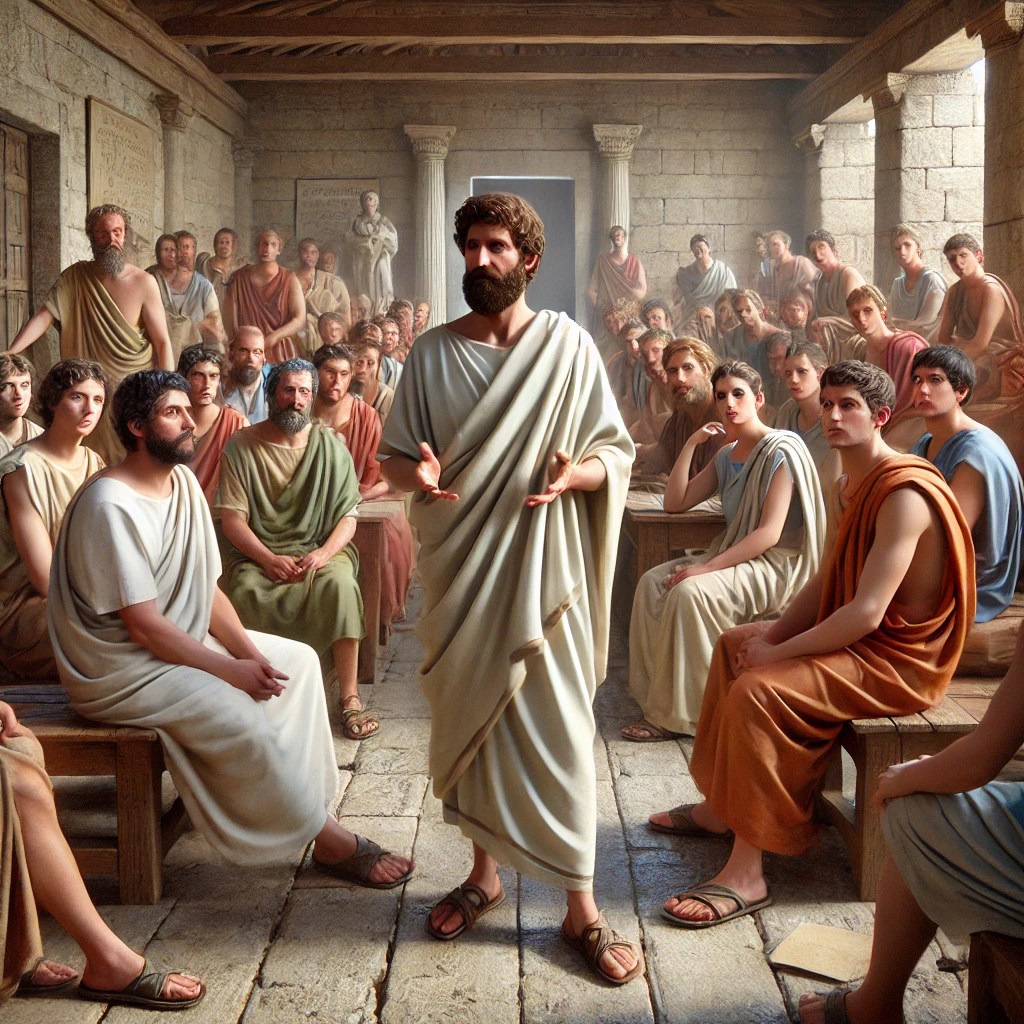
For Musonius, philosophy was meant to be lived. He criticized those who engaged in empty rhetoric without embodying the principles they discussed.
“We ought not to speak great things, but live them.” — Musonius Rufus
He encouraged his students to let their actions reflect their beliefs, fostering a community committed to ethical living.
Modern Applications of His Teachings
Relevance in Today’s World
Musonius Rufus’s wisdom offers valuable insights for contemporary society:
- Minimalism and Sustainable Living: His advocacy for simplicity aligns with modern minimalism and environmental sustainability. Reducing excess allows us to focus on meaningful experiences over material possessions.
- Gender Equality: His progressive views on women’s education resonate with today’s movements for gender equality, challenging lingering societal biases.
- Ethical Leadership: His emphasis on virtue over profit serves as a model for ethical leadership in business and politics, promoting integrity and social responsibility.
- Resilience in Adversity: His teachings on enduring hardships provide guidance for overcoming personal and societal challenges, offering a framework for resilience.
- Community and Compassion: His examples of compassion inspire us to engage in community service and social activism, fostering a more caring and equitable society.
Key Takeaway: Musonius’s teachings are not just historical artifacts but practical guides for living a fulfilling and ethical life today.
Affiliate Recommendations
Recommended Reading
- That One Should Disdain Hardships: The Teachings of a Roman Stoic In Musonius Rufus’s words, “Philosophy is nothing else than to search out by reason what is right and proper and by deeds to put it into practice.” At a time of renewed interest in Stoicism, this collection of Musonius Rufus’s lectures and sayings, beautifully translated by Cora E. Lutz with an introduction by Gretchen Reydams-Schils, offers readers access to the thought of one of history’s most influential and remarkable Stoic thinkers.
- Musonius Rufus: Lectures and Sayings In this volume, readers will find Cynthia King’s translation of Musonius’ lectures, as recorded by his pupil Lucius; the sayings attributed to Musonius by ancient writers; an exchange of letters between Musonius and Apollonius of Tyana; and a letter from Musonius to Pankratides. This volume also includes a preface by William B. Irvine.
Note: As an affiliate, we earn from qualifying purchases. This supports our blog at no additional cost to you.
Join the Conversation
What aspects of Musonius Rufus’s philosophy resonate with you? How can his emphasis on virtue, simplicity, and compassion influence your life?
- Have you embraced minimalism or mindful living? Share your experiences.
- What are your thoughts on education equality today?
- How do you integrate physical wellness with moral development?
- In what ways can we exhibit compassion in our communities?
Your insights enrich our community. Let’s engage in meaningful dialogue inspired by Musonius Rufus’s timeless wisdom.

Conclusion
Musonius Rufus’s teachings transcend time, offering profound wisdom for the modern world. His life, marked by integrity, compassion, and unwavering commitment to virtue, serves as an inspiring example for us all.
By embracing his principles, we can strive toward personal growth, ethical living, and a more equitable society. Musonius challenges us to live authentically, value character over possessions, and act with compassion and justice.
“Let us be the change we wish to see, embodying virtue in thought, word, and deed.” — Musonius Rufus
Thank you for being a part of our community. Together, we seek wisdom and strive for a virtuous life.


 The Stoic Way - Timeless wisdom for Modern resilience
Leave a comment